
In this section
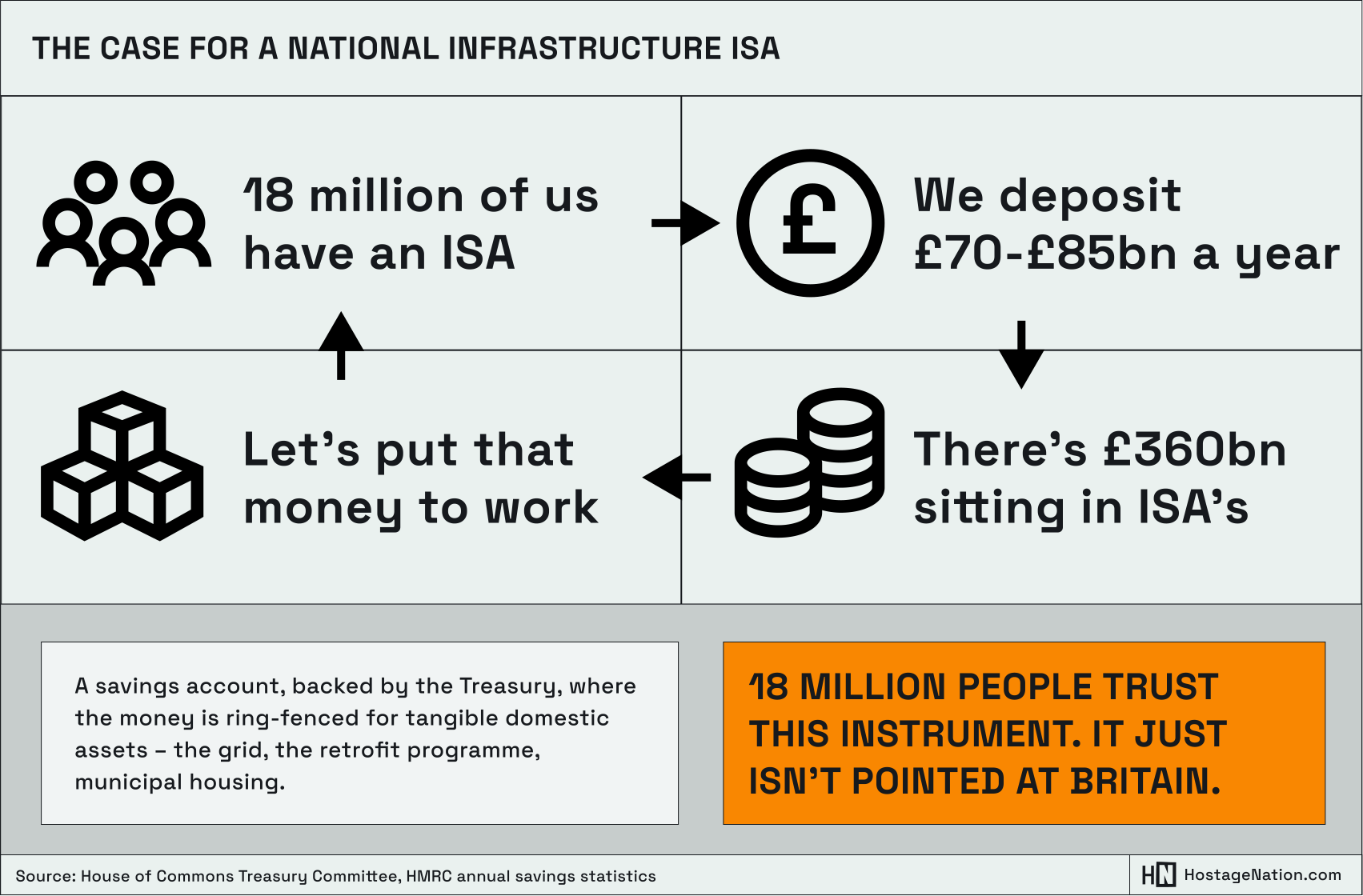
Around 18 million people hold a Cash ISA (individual savings account). That’s a specific kind of savings account where the interest you receive is tax free. Understandably, they’re very popular. Roughly £70 to £85 billion goes into them each year, and the Treasury Committee puts the total sitting in them at £360 billion. The tax relief on ISAs costs the Exchequer somewhere around £9.4 billion a year.
That’s a public subsidy on unearned income, on a scale that would fund a national retrofit programme on its own.
It is held by banks, mostly, where it becomes ordinary deposit funding. British banks lend the bulk of their money against residential property. Which means a large share of our tax-subsidised savings ends up financing the purchase of houses that already exist, bidding up the price of the very asset our children cannot afford to buy.
We pay £9.4 billion a year for that. The government has noticed. Twice.
In February 2025 a Treasury minister asked the House of Lords why Britain has hundreds of billions of pounds sitting in Cash ISAs, and called it a failure.1
Twice, ministers tried to attach a destination to the money.
Chancellor Jeremy Hunt proposed a British ISA in March 2024: an extra £5,000 of allowance, for UK-listed shares only. The investment platforms lobbied the Treasury not to, saying it would complicate the market. It was dropped that September.
Rachel Reeves came back with a version requiring a minimum fifth of the money to go into UK equities. Again the investment institutions pushed back. That was dropped too.
What survived was the one measure with no destination attached. From April 2027 the Cash ISA allowance falls from £20,000 to £12,000 for the under-65s, to push savers out of cash and into shares.
Which shares? Any shares. American ones qualify. A stocks and shares ISA can hold US-listed stock. In practice British taxpayers end up underwriting the capital of American corporations.
Tax policy has to be about more than raising money. It’s about incentivising behaviour.
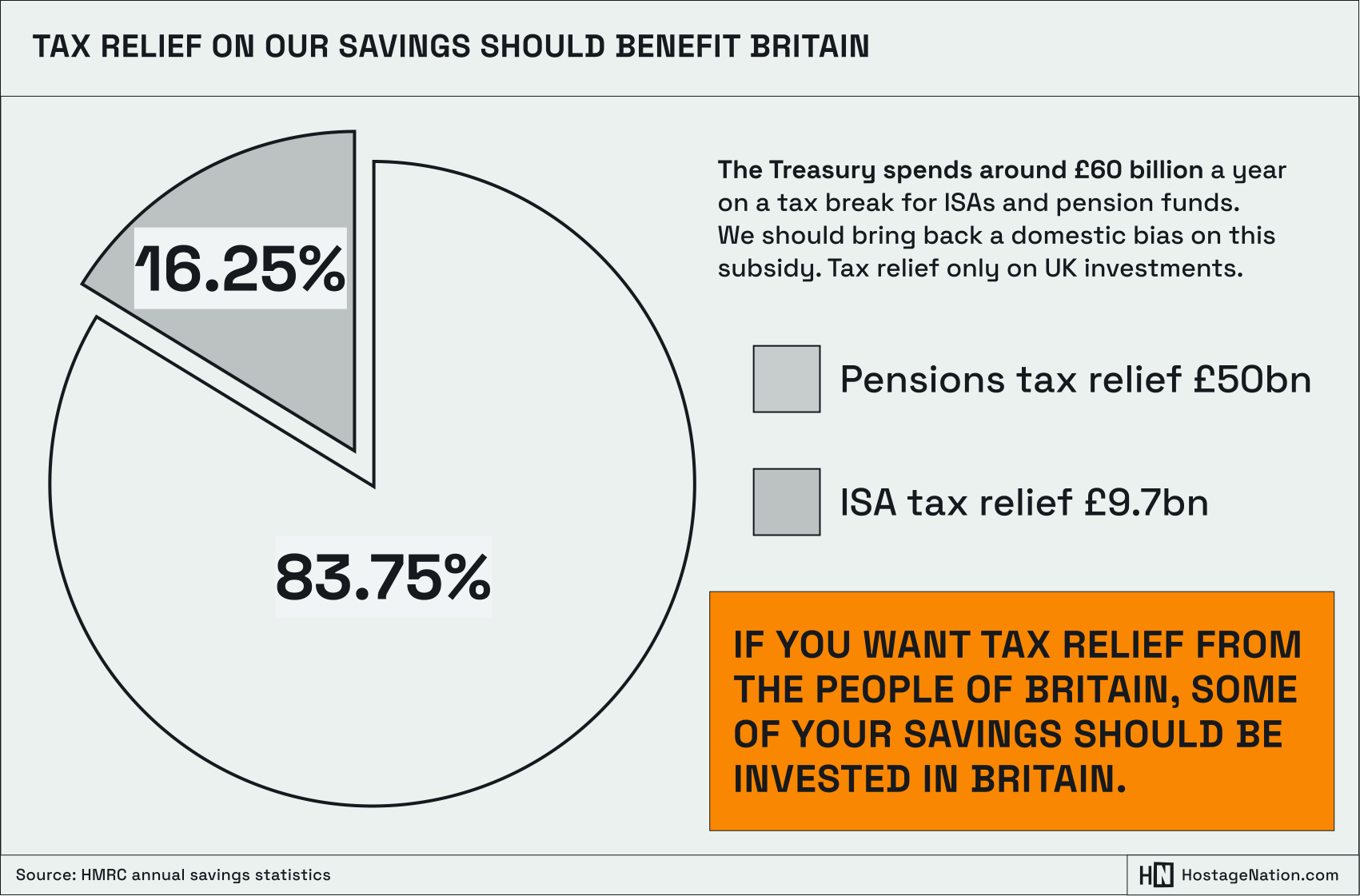
That is the case for a National Infrastructure ISA. Not a new tax. Not a compulsion. A savings account, backed by the Treasury, where the money is ring-fenced for tangible domestic assets – the grid, the retrofit programme, municipal housing. The saver’s return is fixed and guaranteed, as it is with any NS&I product. What makes that rate affordable is the real boost they give the economy: income from energy, rents, and the taxes on the employment they create. The National Infrastructure ISA would be the name of the account available to savers, and various term lengths of National Development Stocks would be the instruments they buy.
“Keep the tax relief for savings that build Britain. Anyone who prefers to back Silicon Valley remains entirely free to do it. But with their own money.”
We recognise that savers need access, while infrastructure projects need decades. Most savers in Cash ISAs roll their money over. While they might switch from one provider to another, they don’t withdraw it.2 Term length is a choice the saver makes, not a condition the state imposes. Instant access for the emergency fund, at a modest rate. Longer terms for money that isn’t going anywhere, at a better rate. That is how the savings market already works, and how NS&I already works.
No new institution is needed. NS&I exists. No new legal power. The Treasury already sets ISA rules every year, and has just used that power to cut the allowance. No compulsion. No confiscation. Nobody’s savings are touched.
This is not financial repression. Everyone keeps their freedom to invest wherever they choose, and earn a fair market rate in the process.
It’s just a condition that tax relief on British savings income should be used to benefit Britain.
- Emma Reynolds, Economic Secretary to the Treasury, February 2025. ↩︎
- On the scale of the pool and the subsidy, see the note to Chapter 16, which gives HMRC Annual Savings Statistics for Cash ISA subscriptions of £69.5bn in 2023/24, a Lloyds Banking Group projection of over £85bn for 2025/26, and an estimated Exchequer cost of ISA tax relief of around £9.4bn in 2024/25. A cross-party Treasury Select Committee report of October 2025 estimated total UK household holdings in Cash ISAs at £360 billion. Around 18 million people hold one. Between 2021-22 and 2023-24 money going into stocks and shares ISAs fell by 9% while Cash ISA subscriptions more than doubled.
The observation that the average pound has been held for around five years is derived by dividing the stock by the annual flow, and should be read as an order of magnitude rather than a measured average holding period; it takes no account of withdrawals, transfers between providers, or the distribution of balances, which is heavily skewed.
On the attempts to attach a destination: Jeremy Hunt announced a British ISA at the Spring Budget of March 2024, offering an additional £5,000 allowance restricted to UK-listed equities. It was abandoned in September 2024, after investment platforms including Hargreaves Lansdown and AJ Bell warned the Treasury that a further ISA product would add complexity and might deter use of the wrappers. A second proposal, requiring a minimum 20% allocation to UK equities, was considered before the November 2025 Budget and dropped following opposition from ISA providers. In February 2025 the Economic Secretary to the Treasury, Emma Reynolds, told the House of Lords that the sums held in Cash ISAs represented a failure to drive investment, and that the money was being drawn away from the London Stock Exchange.
At the November 2025 Budget the Chancellor announced that the Cash ISA allowance would fall to £12,000 from April 2027, with savers aged over 65 retaining the full £20,000. The stated purpose was to move savings from cash into equities. The Treasury Select Committee had recommended prioritising financial education rather than reducing the allowance. On the day of the announcement AJ Bell shares rose 3.2% and IG Group 8.6%. Commentators noted at the time that savers moving into equities might favour overseas markets: US-listed stocks are eligible for a stocks and shares ISA, and the S&P 500 returned an annualised 15.5% over the preceding five years against 13.2% for the FTSE 100. ↩︎